Every farm at some point faces a similar challenge: an excess of equipment, feed, or product and a shortage of sheltered room in which to store it. This is where farm storage buildings come in. They are specifically built to protect everything from equipment to machinery, feed, grain, tools and everything else required to run a farm through four seasons. “When you start to expand and contract operations or anything else like that, it is vital to protect your investments and keep things manageable on a day-to-day basis, and having the right storage in place is part of that,” he said. Western Canadian Building Solutions hears this from farmers all over the region who are considering the same sort of decisions, and the conversations usually begin with trying to understand, what are these buildings, and what do they need to do?
What Are Agricultural Storage Buildings?
At their core, agricultural storage buildings are structures built to protect and organize the things a farm depends on. Depending on the operation, that can mean:
- Farm equipment and machinery — tractors, combines, seeders, and attachments that are expensive to replace and vulnerable to weather
- Hay and feed — bales and bulk feed that need to stay dry to retain their value
- Grain and agricultural products — harvested crops awaiting transport or sale
- Tools and supplies — everything from hand tools to spare parts and maintenance supplies
- Seasonal equipment — items like snow removal gear or irrigation components that rotate in and out of use
- Farm workshops — dedicated space for repairs, fabrication, or general maintenance work
Many farms use a single building for more than one of these purposes, while larger operations may separate storage by function as their needs become more specific.
Why Do Farms Need Agricultural Storage Buildings?
The reasoning goes beyond simply having a place to put things. Proper storage plays a practical role in how a farm operates day to day.
Protecting equipment and materials:– Machinery left exposed to sun, moisture, and temperature swings tends to show wear faster and can require more frequent upkeep. Covered storage helps shield these assets from the elements.
Keeping valuable assets organized:- A dedicated building makes it easier to find tools, parts, and equipment when they’re needed, rather than searching across multiple outdoor areas.
Reducing exposure to weather:- Western Canadian winters and unpredictable spring conditions can be hard on anything left uncovered, from feed to fuel-powered equipment.
Improving workflow and accessibility:- A well-planned building allows equipment to be pulled in and out efficiently, which matters most during planting and harvest windows.
Creating a flexible farm workspace:- Storage buildings often double as workshops or staging areas, adding versatility beyond simple storage.
Supporting changing farm operations:- As a farm adds equipment or shifts what it produces, having adaptable storage space makes those transitions easier to manage.
Common Types of Agricultural Storage Buildings
Not every farm needs the same kind of structure. Common applications include:
- Machinery storage buildings for large equipment that needs wide door openings and open interior space
- Equipment storage for smaller tools, implements, and attachments
- Hay and bale storage designed with airflow and access in mind
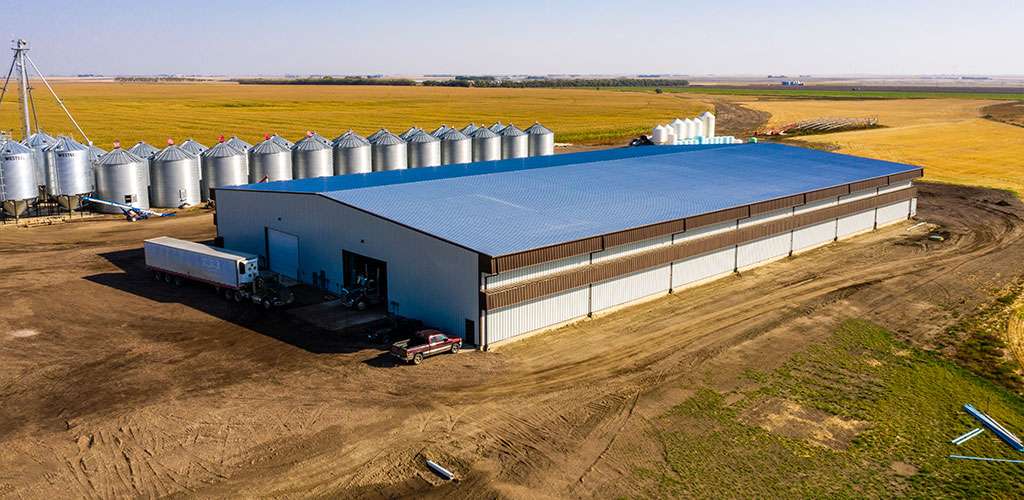
- Grain and feed storage buildings suited to bulk product handling
- Farm shops that combine storage with repair and fabrication space
- Multipurpose agricultural buildings that flex between storage, workshop, and staging functions as needed
Key Features to Consider When Planning a Farm Storage Building
A farm storage building works best when it’s planned around how it will actually be used, not just its footprint. Factors worth thinking through include:
- Building size and layout relative to current and future equipment
- Clear-span or open interior space to avoid columns interrupting machinery movement
- Door size and access matched to the largest equipment expected to enter
- Ventilation to manage moisture, particularly for hay, feed, or grain
- Insulation where appropriate, depending on how the space will be used year-round
- Lighting for safe, efficient work during shorter winter days
- Drainage and site conditions, since a poorly graded site can create long-term issues
- Future expansion potential if the operation is expected to grow
- Storage height, especially for taller equipment or stacked feed and grain
- Local climate and snow or wind considerations, which affect structural design
Choosing the Right Building Design for Western Canada
Western Canadian agricultural buildings must be designed with regional conditions in mind. The requirements can vary by province and municipality, with large differences in snow loads, wind loads, and soil conditions between farm buildings Alberta, farm buildings Saskatchewan, farm buildings Manitoba, and farm buildings British Columbia.
No one design fits every farm. The appropriate solution depends on the purpose of the building, the site, and the building codes relevant to the site. Early engineering, permits, and site planning can help prevent costly surprises later. Given the potential for requirements to vary by jurisdiction, it is always a good idea to double-check the specific permit and code requirements with the appropriate provincial or municipal authority before finalizing a design.
Post-Frame vs. Steel Agricultural Storage Buildings
Two common construction approaches for agricultural storage buildings are post-frame and steel buildings, and each has situations where it tends to fit well.
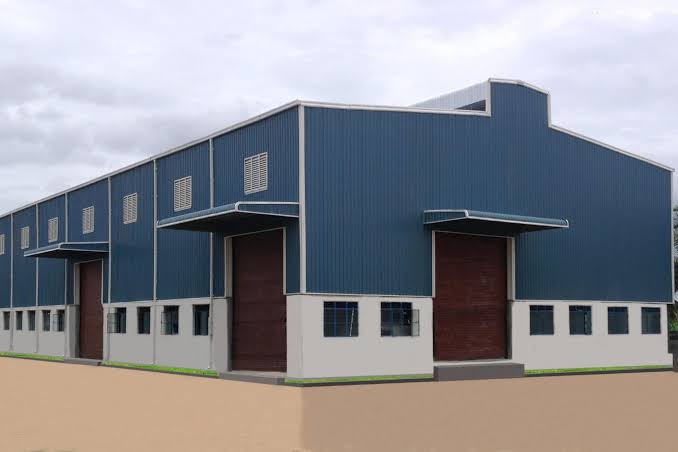
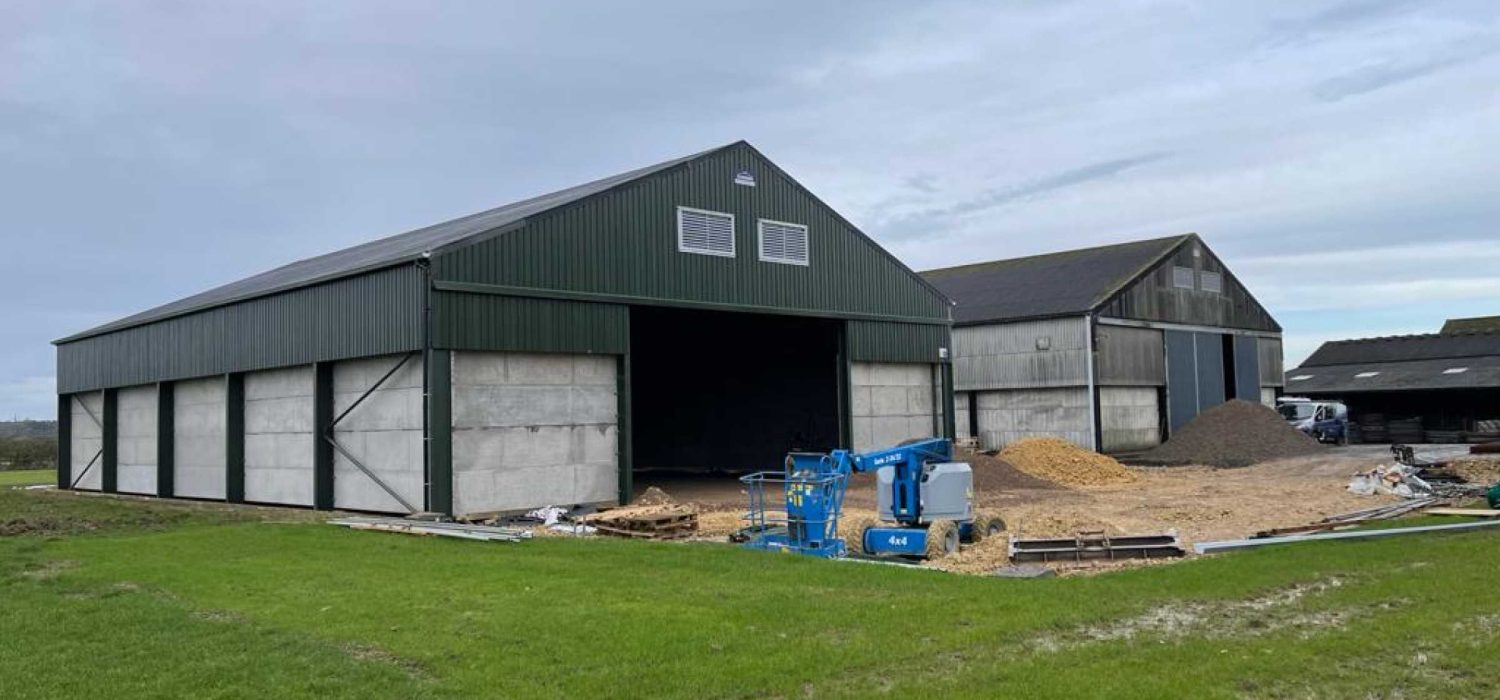
Post-frame is a modern construction method that uses large poles or posts buried in the ground or anchored on concrete to provide structural support, and is well suited for buildings that need a simple open floor plan such as machine storage buildings or multipurpose farm shops. Steel buildings are typically constructed of engineered steel framing with steel cladding, and can be an ideal choice for businesses that prefer specific span configurations or desire long-term flexibility of facility layout.
Neither is necessarily the “right” answer. What works best depends very much on what the purpose of the building is, how far it needs to span, what the layout requirements are, the budget and what they might want to do with the space in some future time. A building designed exclusively for hay storage has different priorities than one designed to be a workshop, and that difference should influence your choice rather than an overall preference for one approach or the other.
How to Plan an Agricultural Storage Building
A clear planning process helps avoid gaps between what’s built and what’s actually needed:
- Define the building’s purpose
- Estimate current and future storage requirements
- Assess the site, including drainage, access, and orientation
- Determine dimensions and access requirements based on equipment size
- Consider local permits and code requirements
- Choose an appropriate construction system for the intended use
- Plan utilities, ventilation, lighting, and drainage
- Work with qualified professionals, including engineers where required
- Review the project scope before construction begins
Why Professional Planning Matters
Agricultural structures do have to consider real engineering, from snow/wind loads to foundation and soil bearing, to site specific soil conditions. Not planning ahead can cause much more costly problems to fix after building rather than when designing.
This is the point at which having an experienced team is a practical difference. Western Canadian Building Solutions treats agricultural projects with the understanding of use based on engineering, local permits and site conditions, not a “one project fits all” approach. It is still critical to verify the applicable codes and permit requirements with the appropriate municipality or province, no matter who is doing the construction.
Final Thoughts
A properly designed agricultural storage building does more than provide shelter; it helps safeguard valuable equipment, keeps operations organized, and provides a farm with room to grow and change over time. Since each property and operation is unique, the ideal size, layout and method of construction should be tailored to the goals of the farm, not a one-size-fits-all template. Western Canadian Building Solutions collaborates with farm owners throughout the region to consider these elements, from site conditions to future use, ensuring the building functions as the operation does. No matter the path a project takes, planning everything from the beginning makes the process of steel building construction, or any other method, much more likely to result in the creation of a building that will serve the farm long after the build is complete.
What are agricultural storage buildings used for?
They are used to house farm equipment, machinery, hay, feed, grain, tools, and seasonal items. Many also double as workshops or spaces for a variety of activities. The specific application typically influences the building’s configuration, door placement, and dimensions, so it’s helpful to determine the main function before finalizing a plan.
What size agricultural storage building do I need?
The size you need depends on what you’re storing now and what you’re expecting to store in a few years. That way you can measure your biggest tools, figure in aisle space and then add a little room for growth. It’s a common reason for farms to underestimate their future needs and get stuck a couple years down the road needing an addition.
Are agricultural storage buildings suitable for farm equipment?
Yes, many are tailored to storing equipment, with wide doors and open interiors that accommodate machinery moving in and out. The correct dimensions and size of the doors depend on the particular equipment that will be stored, so that information should be obtained during the planning stage.
Are steel or post-frame buildings better for farm storage?
Neither is clearly superior. Post-frame and metal buildings are best suited for different sets of budget, span, layout, and use. Which is better for you depends on your particular project, and that’s why it’s a good idea to talk with an experienced builder about your goals before deciding on a construction type.